Unmasking the Culprits: Why Under-Eye Bags Appear
Anatomy of the Under-Eye Area: Thinner Skin and Fat Pads
The under-eye area’s anatomy explains its tendency toward bags. The skin here is roughly 0.5mm thick, far thinner than elsewhere. Fat pads sit beneath it in a loose matrix. As collagen degrades, those pads push forward against the thin dermis. This structural reality is why skin products to reduce bags under eyes must target support, not just moisture. Consider the contributing factors:
- Hereditary fat pad distribution
- Collagen loss in the papillary dermis
- Fluid retention from evening sodium intake
Each factor interacts with the others. I find a single active ingredient rarely suffices. Effective formulations address the deep support matrix. Geography matters too! South Africa’s high UV exposure accelerates collagen breakdown.
Common Triggers: Age, Genetics, Fluid Retention, and Allergies
Nearly 70% of South African women over 35 report visible under-eye puffiness, a figure compounded by the region’s high UV index. Age remains the persistent root. The orbital support system weakens each decade, and temporary puffiness becomes entrenched. Genetics then dictate where that slack becomes visible; some inherit protruding fat chambers, others inherit deep tear troughs that cast shadows. Fluid retention adds a daily variable, sodium and alcohol distort the tissue’s water balance overnight.
Allergies form a separate trigger that many skin products to reduce bags under eyes ignore entirely. Histamine surges and resultant rubbing create temporary edema and broken capillaries. Each mechanism presents differently. This distinction governs how I select skin products to reduce bags under eyes for my South African clients. A formula built for fluid shift fails against fat prolapse.
The Difference Between Temporary Puffiness and Chronic Bags
When the Cape Doctor wind strips the morning mist, the mirror tells a separate truth. Some faces wake swollen, their under-eye tissue holding last night’s sodium and alcohol. This is temporary puffiness, a fluid phenomenon that recedes within hours of movement and hydration. Then there is the deeper narrative. Chronic bags sit fixed beneath the gaze, sculpted by years of gravitational pull and collagen fatigue.
The distinction governs every choice of skin products to reduce bags under eyes. Decongestant formulas containing caffeine or cooling rollers work on the transient kind, urging trapped fluid back toward circulation. They cannot touch the structural kind. Prolapsed fat chambers require interventions that thicken and support the overlying dermis.
Two faces, two mechanisms. The correct skin products to reduce bags under eyes never blur the line between them. They read the evidence, assess the timeline, and respond.
Decoding the Label: Must-Have Ingredients for Under-Eye De-Puffing
Caffeine: The Vasoconstrictor That Wakes Up Tired Eyes
Nearly 30% of topical de-puffing formulas list caffeine as their primary active, yet few consumers grasp why this alkaloid excels. Caffeine constricts the microcapillaries beneath the orbital rim, reducing the serous fluid that settles during sleep. It also blocks adenosine receptors, which indirectly discourages water retention in the reticular dermis.
When scanning skin products to reduce bags under eyes, seek caffeine positioned near the top of the ingredient list, ideally above any occlusive emollients. Its efficacy depends on concentration and vehicle. Gel-based serums deliver caffeine more efficiently than heavy creams.
Examples of synergistic pairings commonly found in effective formulations:
– Potassium gluconate, which balances intracellular electrolytes
– Ceramides, which support the compromised skin barrier
– Vitamin K, which assists with capillary fragility
Remember that caffeine’s effect is transient, lasting roughly four to six hours. That makes it ideal for morning use rather than evening repair.
Peptides and Collagen: Building Firmness and Elasticity
When your under-eye area sags, caffeine alone won’t rebuild structure. Peptides and collagen handle that job. In my hunt for skin products to reduce bags under eyes, these ingredients target the extracellular matrix, addressing firmness rather than fluid pooling.
Peptides are short amino acid chains that signal fibroblasts to make new collagen. Some act as matrikines; others inhibit collagenase. Here’s what I scan for on ingredient labels:
- Palmitoyl tripeptide, a firmness booster
- Copper peptide, known for tissue repair
- Acetyl hexapeptide, which relaxes expression lines
Collagen itself is too large to penetrate the stratum corneum. Effective skin products to reduce bags under eyes use hydrolyzed collagen or collagen peptides. These smaller fragments improve skin density and hydration over weeks, offering a slower but steadier effect than caffeine’s brief de-puffing window!
Hyaluronic Acid: Hydration to Plump and Smooth Fine Lines
Under-eye skin has fewer sebaceous glands than the rest of your face, which means it cannot produce its own moisture barrier. Hyaluronic acid steps in as a humectant, drawing water from the dermis and the air. When I evaluate skin products to reduce bags under eyes, I check for this ingredient in multiple molecular weights. Low-weight hyaluronic acid penetrates deeper, while high-weight versions create a surface film that smooths fine lines by sheer hydration.
Look for specific forms on the label:
- Sodium hyaluronate, a smaller salt that absorbs well
- Hydrolyzed hyaluronic acid, which reaches the lower epidermis
This combination plumps the under-eye area without adding fluid to the fat pads. The effect is temporary, but it offers immediate visual improvement that complements caffeine’s vasoconstriction.
Antioxidants: Vitamin C, Niacinamide, and Green Tea to Combat Stress
Oxidative stress ages the under-eye area faster than any other facial region. Free radicals from UV exposure, polluted urban air, and late-night screen use break down collagen and trigger inflammation that surfaces as puffiness. Under the strong South African sun, this damage accelerates. When I evaluate skin products to reduce bags under eyes, I look for three antioxidants that target this specific damage.
Vitamin C, whether ascorbic acid or magnesium ascorbyl phosphate, neutralises free radicals while supporting collagen synthesis. Niacinamide (vitamin B3) reduces inflammation and fortifies the skin barrier. Green tea polyphenols, especially EGCG, intercept oxidative stress at the cellular level.
Stability matters. Look for:
- Vitamin C in opaque, airless packaging
- Niacinamide between 2% and 5%
- Green tea extract near the top of the ingredient list
These antioxidants do not constrict vessels or plump tissue. They disarm the stress signals that make bags more pronounced, a mechanism worth checking when comparing skin products to reduce bags under eyes.
The Product Arsenal: Choosing the Right Format for Your Under-Eye Concerns
Eye Creams vs. Gels: Texture Matters for Morning and Night
Nearly half of adults in Gauteng report that under-eye puffiness alters their makeup routine each morning. Choosing between an eye cream and an eye gel depends on the hour and the texture you need. Creams contain occlusive emollients that hold moisture through the night. Gels, made with water and polymers, absorb quickly and sit well under makeup or SPF. This difference matters when you pick skin products to reduce bags under eyes.
In the morning, a chilled gel provides a cooling constriction that eases fluid retention without a greasy film. At night, a cream supports the skin barrier during its repair cycle. Your primary concern guides the choice:
- Use a gel when waking with puffiness and needing fast absorption.
- Use a cream when dealing with dry, sensitive skin or long evenings.
I alternate formats based on the day’s demands, and my under-eye skin responds better than with a single product.
Patches and Masks: Quick Fixes for Immediate Radiance
Patches and masks occupy a strange middle ground in the arsenal of skin products to reduce bags under eyes. They deliver a concentrated dose in a short window, ten to fifteen minutes. Hydrogel patches cling to the orbital bone, pressing cooling agents into the tissue while you wait. Sheet masks do similar work but cover a wider area.
The effect is theatrical! You remove them and the skin looks tighter, brighter, more awake. This is temporary, but for mornings when the mirror betrays you, that is enough. I keep a pair in the fridge. The cold matters as much as the formula.
- Hydrogel patches for targeted, cooling relief under the eyes
- Fabric masks for broader hydration across the lower face
- Overnight masks for sustained work while you sleep
The choice depends on the hour and the insult. A patch before an event. A mask after a long night. Neither replaces a serum, but both earn their place among skin products to reduce bags under eyes.
Rollers and Cooling Tools: Massage Meets Active Ingredients
Cold quartz rollers and gua sha stones have moved from the beauty counter to the dermatologist’s shelf. They work through lymphatic drainage, essential when fluid retention causes morning puffiness. Rolling from the inner corner toward the temple pushes stagnation along natural pathways.
South African buyers increasingly choose skin products to reduce bags under eyes that pair a formula with a device. The metal tip cools on contact. The massage warms the surface, and active ingredients travel deeper into the tissue. Ask what the tool must do:
- A stainless steel roller for a daily lymphatic flush
- Cooling globes from the freezer for emergency depuffing
- A gua sha stone for controlled pressure along the orbital rim
The best skin products to reduce bags under eyes fail without the right delivery method. A thick balm in a jar cannot mimic a light fluid spread by a chilled roller.
Retinol-Rich Products: When and How to Use Without Irritation
Choosing skin products to reduce bags under eyes starts with texture. Under-eye skin absorbs thin fluids faster than thick creams. That is why serums and lightweight gels often outperform heavy balms. The right format depends on your primary concern. Watery textures suit puffiness. Oil-based formulas lock in moisture overnight.
Retinol demands a different approach. Dermatologists suggest starting twice a week, always at night. A pea-sized amount spreads across both under-eye areas. Damp skin increases penetration and irritation, so apply to dry skin. Many people layer a caffeine serum first, and I have seen this pairing work well when the skin also needs skin products to reduce bags under eyes. Wait ten minutes before the retinol.
Consider these formats:
- Roll-on applicators for quick touch-ups
- Ampoules for high-potency doses
- Stick balms for targeted spot use
If stinging occurs, buffer with moisturizer or switch to a gentler retinyl ester. Consistency matters more than concentration!
Application Mastery: Getting the Most Out of Your Under-Eye Products
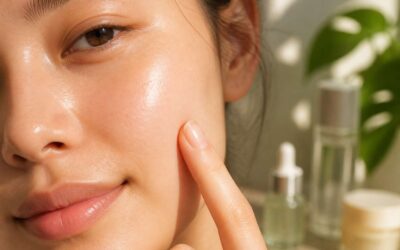
Proper Technique: Ring Finger, Tap, and Gentle Patting
In the theatre of skincare, the under-eye area rewards restraint. The ring finger, being the weakest digit, is the only sensible performer for this role. I have witnessed otherwise rational people prod their under-eye with an index finger, expecting results. That approach delivers irritation, not improvement.
The correct motion is a tap, not a rub. Begin at the inner corner and move outward, patting in a staccato rhythm. This encourages the formula to settle without dragging the skin. For optimal results, apply when the skin is slightly damp, as moisture aids penetration.
Observe the common missteps in any public restroom:
- Circling motions that stretch the tissue.
- Using the middle finger, which carries more force.
- Overloading the area until it looks greasy.
Mastery of these small movements transforms any skin products to reduce bags under eyes into a precise instrument.
Layering: How to Sequence with Serums, Creams, and Sunscreen
The under-eye area rewards a specific order, not a haphazard approach. It demands a precise sequence to make any skin products to reduce bags under eyes work. Watery serums must go first. A peptide or caffeine serum sinks in quickly. Then the occlusive cream locks hydration into that thin tissue. Sunscreen is the final act, applied after creams settle. Skipping the wait time between steps fails, as does layering a thick product before a thin one. The order dictates everything!
- Apply a water-based serum to clean, damp skin.
- Wait two minutes for absorption.
- Press a pea-sized amount of cream over the orbital bone.
- Finish with a sunscreen that won’t sting your eyes.
Doing it differently forces active ingredients to compete, so none of them deliver results.
Frequency and Timing: Morning vs. Night Routines
Few routines fail because of the product itself; they fail because of the hour on the clock. Your under-eye skin runs on a circadian schedule. Morning calls for lightweight, decongesting skin products to reduce bags under eyes, because nocturnal lymph peaks before breakfast. Night demands heavier reparative textures, but apply them 60 to 90 minutes before bed. The lipid barrier tightens after midnight, blocking penetration.
Here is what I have learned about timing:
- Morning benefits from caffeine and vitamin C for overnight swelling.
- Evening favors peptides and bakuchiol for deep sleep receptors.
That rhythm ensures each ingredient performs its function. Frequency is secondary to adherence; one consistent daily application outperforms sporadic luxury! Do not skip the evening step, since oxidative stress accumulates then. Splitting the application across morning and sunset addresses stubborn fluid shifts.
Beyond the Jar: Lifestyle Shifts That Amplify Your Under-Eye Skincare
Sleep Position and Pillow Elevation: Nightly Habits That Reduce A.M. Bags
Around a third of your day is spent horizontal, and that geometry dictates how much fluid gathers beneath your eyes. Sleeping flat lets lymphatic fluid pool in the under-eye hollows, while a wedged pillow or an extra pillow keeps gravity working overnight. Back sleeping prevents the asymmetrical puffiness that comes from pressing one cheek into a pillow.
Good sleep posture works alongside any topical routine. The right skin products to reduce bags under eyes face less swelling when your head stays elevated as you rest.
- A wedge pillow holds the head at an angle, so fluid drains instead of settling.
- A body pillow behind the back discourages rolling onto one side overnight.
- An early dinner reduces the sodium load that encourages retention during sleep.
Allergy Management: Antihistamines and Avoidance Strategies
Allergies silently inflame the under-eye area, turning harmless pollen into visible puffiness. For many South Africans, this is the real culprit behind chronic bags. While skin products to reduce bags under eyes target the surface, antihistamines address the source. When histamine triggers fluid leakage into fragile capillaries, even the best eye cream cannot compensate for the reaction.
Avoidance is equally direct. From my experience, small environmental changes produce outsized results:
- Keep windows closed during high pollen counts.
- Wash pillowcases in hot water weekly.
- Switch to a fragrance-free moisturizer.
These shifts reduce the histamine load your body processes. An oral antihistamine, taken before bed, calms the response overnight. Combined with topical care, allergy management helps you see the results your skincare actually delivers.
Sun Protection: Shielding the Under-Eye Area from UV Damage
Sun exposure accelerates collagen breakdown in the delicate under-eye zone, making bags appear deeper and more shadowed. The skin there has less melanin and fewer oil glands, so UV damage accumulates quietly. I see many people invest in skin products to reduce bags under eyes while skipping sunscreen, which undermines their efforts entirely.
Consider these steps to shield the area effectively:
- Apply a mineral SPF 50 around the orbital bone daily.
- Wear wraparound sunglasses that block UVA and UVB.
- Seek shade during peak UV hours, typically 10am to 4pm.
Protection also matters for current puffiness. Sun damage thickens the skin’s outer layer, making fluid retention and swelling more visible. Filtering UV before it reaches capillaries preserves the firmness that topical products aim to support. South Africans face some of the highest UV indices globally, so this step is essential.



0 Comments