Rethinking Your Beauty Shelf
The Hidden Cost of Trend-Driven Purchases
Industry surveys reveal that nearly half of all beauty products purchased never get used. The average shelf holds a collection of half-used serums and forgotten samples. I have watched this pattern play out in my bathroom! Across South Africa, the hidden cost of trend-driven purchases goes beyond the price tag.
Trend-driven purchases are the primary driver. When a new ingredient goes viral or a celebrity launches a fresh line, the urge to buy overrides practical need. You end up with beauty products you don’t need, tucked behind the items you actually reach for daily. The real cost accumulates in three quiet ways:
- Financial waste from products that expire before use,
- Environmental strain from packaging that ends up in landfills,
- Mental clutter from a routine that overwhelms rather than simplifies.
Each purchase feels justified in the moment, but the shelf itself is the result of decisions driven by marketing, not need.
Why More Products Don’t Equal Better Results
A crowded shelf disrupts your routine. Products sit untouched while their active ingredients lose potency. In South Africa’s varied climate, from the Highveld to the coast, skin needs fewer products used consistently, not more options rotated sporadically.
The beauty products you don’t need occupy prime shelf space. They push the effective ones to the back. My own bathroom once held twenty products, yet my daily routine used four.
The functional routine is compact:
- A cleanser that removes sunscreen and grime
- A moisturiser matched to the province’s humidity
- One targeted treatment for a specific concern
This trio, applied daily, produces visible results. The surplus bottles simply occupy space.
Signature Ingredients That Are Just Marketing Hype
Every jar promises a miracle in a single hero ingredient. Rooibos extract, marula oil, snail mucin. The concentration in most formulations wouldn’t impress a homeopath. A 0.001% inclusion rate lets the brand print the ingredient on the front while the formula delivers nothing measurable to your epidermis.
Those beauty products you don’t need are often the ones with the most theatrical labelling. The packaging boasts ancient botanicals. The ingredient list reveals water, preservatives, and a trace of the advertised extract. I bought a serum for its signature compound only to find it ranked below the fragrance!
- Marula oil at 0.5% concentration while mineral oil forms the base
- Kalahari melon extract listed after the colourant
- Hyaluronic acid lacking the molecular weight to penetrate
Marketing teams know a single alluring name sells units. Your skin responds to formulation, not folklore. The hero ingredient on the label rarely survives contact with your face.
How to Audit Your Current Collection
Your bathroom shelf holds the evidence of every impulsive purchase. Thirty products sit half used. Ten of them are beauty products you don’t need. An audit starts with the expiry dates printed on each bottle. Most people forget that skincare degrades. The texture changes. The fragrance turns sharp.
I sort my own collection twice a year. The ritual reveals patterns. I keep reaching for the same three items. The others collect dust! The clearest judgment comes when you separate functional products from failed ones:
- Separated emulsions that refuse to blend
- Serums that smell of overtaken oils
- Mascaras that crumble on the wand
The audit clears mental space. Each bottle you discard returns a small measure of honesty. Your routine narrows to what survives regular contact with your skin. The rest was decoration.
Skincare Products You Can Skip
Toner: The Overhyped Middle Step
Toner promises to balance, tighten, and refine your pores. In my experience, it delivers little beyond a wet face. For most skin types, this middle step is one of those beauty products you don’t need. Modern cleansers already maintain your skin’s pH, so toner’s original purpose has vanished.
What remains is a liquid that often contains alcohol or fragrance, which can strip moisture. If you’re reviewing your routine, these are safe to drop:
- Astringent toners that leave skin tight.
- Exfoliating toners that overlap with serums.
Your cleanser and moisturiser are sufficient. That’s the entire routine!
Sheet Masks and Their Temporary Fix
Nobody remembers a sheet mask the morning after. The fifteen minute soak plumps your skin temporarily, but the effect rarely survives a full night’s sleep. Sheet masks promise dramatic results and deliver a temporary glow, often leaving behind a sticky residue.
The price per minute of benefit is absurd. A single sheet mask at a South African retailer costs as much as a serum that lasts three months. You are buying water, glycerin, and a piece of fabric. Consider what you actually receive:
- A temporary surge of moisture that evaporates within hours
- A glow that fades by the next morning
- One use packaging that ends up in the bin
These are beauty products you don’t need. Your regular moisturiser performs the same function with better value and longer lasting effects. Sheet masks sell a sensation, not a solution.
Eye Creams That Duplicate Your Moisturizer
There is no worse bargain in your bathroom than the tiny jar of eye cream. Dermatologists will tell you the skin around your eyes is thinner, but it still responds to the same humectants and occlusives found in your regular face moisturizer. So why the separate product? Examine the ingredient list.
- Water, glycerin, and dimethicone, the same base you already own.
- A smaller container for a higher price per gram.
- No sunscreen, which is the one thing that actually protects that delicate area.
You are paying for packaging and a marketing story. Save your rand and use your moisturizer! These are beauty products you don’t need. Eye creams duplicate what you already apply every morning.
Facial Mists That Do More Harm Than Good
A facial mist promises quick refreshment. Yet in the Karoo dry air or a Joburg winter, that fine spray often accelerates transepidermal water loss. The water evaporates, pulling your skin’s natural moisture with it. You end up drier than before.
Most mists contain little beyond water, glycerin, and a preservative. The preservatives can irritate sensitive skin. The glycerin draws water from deeper layers when the humidity is low. This is one of those beauty products you don’t need. A damp cloth works better and costs a fraction of a rand. A simple splash of water and a pat dry does the same without the astringent effect.
Consider what you actually spray on your face. Some mists include alcohol for a cooling feel, which strips sebum. Others rely on fragrance that triggers inflammation. The net effect is a product that works against your skin’s barrier.
Exfoliating Scrubs You Should Trade for Acids
Granule scrubs feel purposeful in the hand, but they often shave thin layers of your acid mantle along with the dead cells. Those apricot kernels and crushed shells are beauty products you don’t need when your barrier is already contending with the Highveld sun or the Cape wind.
I swapped my last scrub for a 10% lactic acid lotion. The shift showed in three weeks. My skin turned smooth without the flush I had accepted as normal.
- Scrubs remove cells blindly.
- Acids dissolve the bonds between old cells with exactness.
Salicylic acid descends into the pore. Glycolic acid works from within. A patient hand and a cotton pad outperform every gritty paste I ever bought.
Makeup Items That Never Make the Cut
Color Correcting Palettes for Real Life
The average color correcting palette contains six shades. Most of us use one or two before the entire palette ends up in a drawer. These rainbow-hued compacts promise to neutralize everything from rosacea to hyperpigmentation, but they demand a level of skill and lighting that simply doesn’t exist at 6am.
In theory, the green shade cancels redness. In practice, you have a bright green patch on your cheek. The purple shade leaves a chalky lavender cast under your foundation. These are beauty products you don’t need, especially under Johannesburg’s unforgiving natural light.
Consider what actually happens:
- You apply green to a pimple.
- You blend until your skin feels raw.
- You apply foundation.
- The green still peeks through, or the foundation covers it entirely.
A simple flesh-toned concealer handles the task without the guesswork. The palette sits untouched. It belongs on the list of beauty products you don’t need.
Setting Spray: Locking in What Doesn’t Exist
Setting spray promises to hold your makeup for sixteen hours. In Johannesburg’s heat, that promise evaporates by lunchtime. The mist feels refreshing for thirty seconds, then your skin remembers how to sweat.
What are you actually locking in?
- Midday oil at your T-zone
- Mask marks from the Gautrain
- The humidity you walked through in Rosebank
Your foundation shifts exactly as it would without the spray. I have seen this happen in Melrose Arch, where the summer humidity affects your makeup as much as any mist. A fine powder does the same work with less fuss.
Setting spray serves film sets and bridal shoots, where a photographer needs a static face for eight minutes. Your commute is not a film set. This belongs on the list of beauty products you don’t need. Your face will move. That is normal.
Brow Soaps and Novelties That Dry Out
Brow soap arrived with a loud promise: feathered, brushed-up arches that stay perfect from morning to night. In Durban’s humidity, that effect lasts roughly until you step outside. The soap dries, cracks, and leaves white flakes that catch the light like a warning sign. You then spend five minutes fixing what the product was supposed to achieve. The brow hairs return to their natural direction, and the soap pans themselves harden into useless blocks within weeks.
Other novelties follow the same pattern:
– Glitter gels that solidify inside the tube
– Lip toppers that separate into oily layers
– Scented brow waxes that attract dust
– Cushion compacts that dry out before you finish the first layer
These are beauty products you don’t need. They exist for the packaging, not for your face. Your brows move, your skin produces oil, and your day has more pressing matters than a laminated arch. The money stays in your wallet.
Highlighters for Everyday Wear
A highlighter promises six hours of radiance. It delivers thirty minutes of shine and a permanent spot in your junk drawer. For everyday wear, this product fails before lunch.
Highlighters settle into lines, emphasize pores, and slide around your face as the day heats up. In Johannesburg’s dry air, the powder clings to dry patches. In Durban’s humidity, it turns into a greasy film. The compact cracks, the pan chips, or the shade turns pink.
The recurring complaints are tedious:
- Powder settles into every fine line by ten in the morning
- Liquid versions separate inside the tube within weeks
- Stick versions pull off your foundation
These are beauty products you don’t need. Your moisturizer gives the glow, your blush adds the colour, and your sunscreen already makes you shine.
Lip Kits You’ll Never Use Beyond the First Try
Lip kits promise a complete pout in one box. The reality is that only one shade suits you, and the rest stays in the drawer. The liner drags across your lips, the gloss turns sticky within an hour, and the matte shades settle into every crack by midday. These are beauty products you don’t need, presented as a bargain.
- The deep red shade remains untouched because it is too dark for office wear.
- The pencil snaps at the tip after two uses.
- The liquid lipstick separates into pigment and oil within a month.
You will reach for your single favourite lipstick every time, which proves that lip kits are beauty products you don’t need. One well-chosen colour outperforms a box of promises.
Full-Coverage Foundations for a Natural Look
A full coverage foundation promises a natural look, which is a contradiction. Heavy pigments that hide every pore cannot imitate bare skin. The formula oxidises unevenly, leaving a mask that photographs grey and feels tight by lunchtime. My own drawer holds two such bottles, purchased after persuasive demonstrations under fluorescent lighting.
These are beauty products you don’t need, yet marketing insists otherwise. Full coverage demands more product, more tools, and more time than any realistic routine allows. The packaging boasts 24 hour wear and breathable comfort. The reality involves creasing, caking, and a shade range that misses many South African undertones entirely.
Consider the true cost of chasing this finish!
- Three pumps for uniform application
- A baking powder to set every crease
- Setting spray to lock it down
- Cleansing oil to remove it properly
The routine multiplies while the foundation remains a perfect specimen of beauty products you don’t need.
Beauty Tools and Gadgets Overpromising Results
Jade Rollers That Provide Echo-Level Benefits
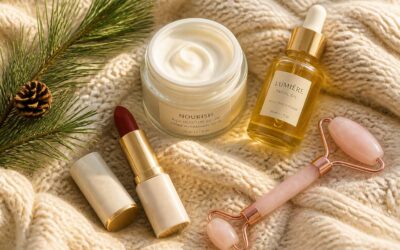
Over R350 for a stone that moves your skin without changing it. Jade rollers promise lymphatic drainage and de-puffing. They deliver a cold sensation that fades in minutes. It does not alter circulation. It does not sculpt your face. I have watched people press these tools into their skin hoping for structural change. That outcome belongs to cosmetic procedures, not stone tools.
Among beauty products you don’t need, jade rollers take a prominent spot. The evidence for their efficacy is anecdotal. A roller feels pleasant, but so does a chilled spoon. The difference is the price tag! Consider what you buy:
- A stone that costs pennies to produce.
- A handle that does nothing beyond grip.
- A promise that your jawline will transform.
The echo comes from the marketing department. Real change requires active ingredients and consistent care. Rolling stone over your face is a ritual, not a treatment.
LED Masks You’re Not Using Enough
Few beauty purchases carry more hope than a LED mask. The box promises photorejuvenation backed by genuine clinical research, unlike the jade roller. The science holds up. The problem is adherence. Protocols require ten to twenty minutes daily for twelve weeks. That is over twenty hours of commitment for a visible result.
Most owners abandon the mask within a month. The device becomes a costly ornament on a shelf.
Here is what you are actually funding:
- A panel of bulbs with a finite lifespan
- A rigid shell that presses against your face
- A timer that reminds you of your lapse
- A hope that purchase replaces discipline
If you skip your nightly skincare routine, a LED mask is a beauty product you don’t need. The glow demands persistence, not ownership.
Microcurrent Devices for the Weekend Warrior
Microcurrent devices promise a sculpted jawline after a few sessions. The weekend warrior buys one, watches a tutorial, then abandons it by Tuesday. Unlike a gym membership, this gadget doesn’t even get you out of breath.
Here is what you are actually funding: a tiny current that mimics your facial muscles’ natural signals. To see results, you need five minutes a day, every day. The casual user expects the glow without the grind. That makes this one of those beauty products you don’t need unless you have monastic discipline.
- A weekly zap that does nothing
- A charging dock that gathers dust
- An instruction manual with twenty steps
If you cannot commit to daily use, save your rand. The mirror will not magically reshape itself. Consider this gadget a novelty, not a necessity. In a sea of beauty products you don’t need, microcurrent devices hold the crown for false hope.
Electric Cleansing Brushes That Strip Your Barrier
Electric cleansing brushes suggest power, a mechanical scrubbing that must surely rival a professional facial. In practice, these oscillating bristle heads strip the skin’s acid mantle. The result is that tight, squeaky feeling many mistake for cleanliness. That squeak signals a compromised barrier!
I have watched friends trade gentle cleansers for these buzzing wands, only to develop redness within weeks. The brush does not discriminate. It removes makeup, yes, but it also removes the ceramides holding your skin together. That places electric cleansing brushes firmly in the category of beauty products you don’t need.
The marketing promises:
- Deep pore cleansing that fingers cannot achieve
- A daily ritual taking mere seconds
- Instant visible brightness
The reality is a compromised barrier, increased water loss, and a very expensive dust collector. Your hands and a decent cleanser were always enough. Among beauty products you don’t need, this one actively harms.
Fancy Gua Sha Tools vs Your Own Hands
In the pantheon of beauty products you don’t need, sculpted quartz tools rank surprisingly high. Part of the appeal is ceremonial: you hold a stone, you trace lines, you feel like a wellness practitioner. The truth is simpler. Your hands have warmth, dexterity, and proprioception. A fancy gua sha tool offers a rigid edge, but it cannot sense tension or inflammation. It cannot adjust pressure when your skin feels fragile.
Consider what these gadgets promise:
- Lymphatic drainage beyond manual touch.
- Defined jawlines and lifted cheekbones.
- De-puffing that lasts longer than a cold morning.
Our own fingers perform these movements more intelligently. The tool is an intermediary, not a teacher. In South Africa, with humidity changes and mineral-heavy water, skin needs gentle, adaptive manipulation. That adaptability lives in your palms, not in a rose quartz slab. So while the tool looks lovely on a shelf, it belongs on the growing list of beauty products you don’t need. Your hands are the original device.
Building a Minimalist Routine That Actually Works
The Four Steps You Truly Need: Cleanse, Moisturize, Protect, Treat
Count your bathroom products and then count the steps you actually rely on. Beauty products you don’t need tend to accumulate in that gap. A minimalist routine must include four non-negotiable steps:
- Cleanse to remove impurities and prep the skin.
- Moisturize to keep the barrier intact.
- Protect with sunscreen every morning.
- Treat with an active that addresses your specific concern.
South African humidity, dry winters, and harsh sun demand consistency over complexity. Once you compare your collection to these four pillars, the excess becomes obvious. The extra step that reads nicely on the label but duplicates what your moisturizer already does? That belongs to the category of beauty products you don’t need. The process stays short, repeatable, and effective.
How to Repurpose Products You Already Own
Building a minimalist routine starts with honesty about what you actually reach for each morning. That neglected pore strip? It works as a blotting paper for your T-zone. The thick night cream you stopped using becomes a hand treatment during Cape Town’s dry winter.
Repurposing products reduces waste and keeps your shelf lean. Before buying anything new, ask whether a current product can fill that role. Most beauty products you don’t need were purchased for a future version of yourself that never showed up.
- Use facial oil as cuticle care.
- Turn a drying clay mask into a spot treatment.
- Apply leftover serum to your neck and chest.
This approach keeps the routine sustainable for both your skin and your budget, without giving up the products you already invested in.
Switch to Multi-Functional Formulas to Save Money
A 2023 Euromonitor survey found that the average South African woman owns 40 cosmetic products but regularly uses only 12. The other 28 take up prime bathroom shelf space, representing beauty products you don’t need. The fastest fix is not another storage bin. It is switching to multi-functional formulas that save money and mental bandwidth.
Consider a tinted moisturiser with SPF that also evens out skin tone. Or a balm that removes makeup, conditions cuticles, and tames flyaways. One product, three jobs, one price tag.
- Fewer bottles means less time deciding what to apply.
- Multi-functional formulas lower the cost per application.
When each product earns its place, the routine builds itself around what actually serves your skin.
The ‘One-In, One-Out’ Rule for Beauty Clutter
Minimalism is a practice, not a purchase. The one-in, one-out rule keeps beauty products you don’t need from piling up. When a new serum catches your eye, an old bottle must leave. It sounds simple, but it forces a decision every time.
I keep one small tray for daily essentials. Everything else sits in a drawer I check once a month. If a product hasn’t been touched in 30 days, it goes. That review takes five minutes and prevents the slow creep of clutter.
- One cleanser
- One moisturiser
- One SPF
- One treatment
The list is short on purpose. Every new item has to replace an existing one, so your routine stays lean. Beauty products you don’t need never get a chance to accumulate.
Signs You’re Ready to Drop a Product Permanently
Your skin does not care about your shelfie. The average bathroom cabinet in Johannesburg holds 34 beauty products, and seven of them still have their plastic wrap on. Those sealed bottles are beauty products you don’t need, purchased for a version of yourself that never showed up.
A minimalist routine works when it survives a Tuesday. Not a holiday, not a wedding weekend. The items that remain earn their place every single morning.
Signs you are ready to drop a product permanently:
- You only reach for it when you spot it in the mirror, not when your skin asks for it.
- You cannot remember its texture or how it smells.
- Your skin improved after you forgot it existed.
- You have repurchased it twice yet still have the old bottle.
This is not about discipline. It is about admitting that a cream you resent will not suddenly become essential.
Shopping Mindfully: What to Avoid at the Checkout Counter
Building a minimalist routine starts at the checkout counter, not the bathroom shelf. Every purchase begins as a promise, and most promises fade before the seal breaks. I now ask one question before anything reaches my basket: does this replace an existing step or simply add a new one? If it adds, it becomes another one of the beauty products you don’t need.
Shopping mindfully means treating your skin type as a fixed address, not a trend report. The woman who buys for her future self ends up with sealed bottles and a guilty conscience. Stick to formulas that serve Tuesday mornings.
- Anything that duplicates a step you already own
- Anything that requires a learning curve to apply correctly
- Anything you cannot explain in one sentence
That last rule is the sharpest filter I use. If the sales pitch takes longer than the product’s shelf life, keep walking.


0 Comments